
Introduction

Once you understand what a sinking fund is, the next question is usually: which sinking fund categories should I actually start with? With so many potential expenses to plan for, it’s easy to feel overwhelmed trying to save for everything at once.
This guide walks through 10 practical sinking fund categories, along with a simple framework for prioritizing which ones to start with based on your budget and upcoming expenses.
Quick Recap: What Is a Sinking Fund?
A sinking fund is money set aside gradually, over time, for a specific known future expense — rather than scrambling to cover a large cost all at once. If you’re new to the concept, our guide on What Is a Sinking Fund?https://wealthdailypro.com/what-is-a-sinking-fund/ breaks down exactly how they work and how they differ from an emergency fund.
10 Popular Sinking Fund Categories
1. Holiday and Gift Spending
One of the most common sinking fund categories, since holiday spending tends to arrive at the same time every year but often catches budgets off guard anyway.
2. Car Maintenance and Repairs

Setting aside a small amount monthly for routine maintenance, tires, or unexpected repairs can prevent a surprise mechanic bill from disrupting your budget.
3. Annual Insurance Premiums
If your insurance is billed annually rather than monthly, a dedicated sinking fund can turn one large payment into smaller, manageable monthly contributions.
4. Home Repairs and Maintenance

From appliance replacements to seasonal maintenance, homeownership comes with predictable — if irregularly timed — expenses that a sinking fund can help smooth out.
5. Vacations and Travel

Rather than putting travel expenses on a credit card, a dedicated vacation sinking fund allows you to pay for trips with money you’ve already saved.
6. Back-to-School Expenses
For parents, the start of a school year often brings a cluster of costs — supplies, clothing, and activity fees — that can be planned for well in advance.
7. Medical and Dental Co-Pays
While a true emergency fund covers unexpected medical emergencies, a sinking fund can help cover predictable costs like annual checkups, dental cleanings, or prescription renewals.
8. Pet Care Costs
Routine vet visits, grooming, and pet supplies are ongoing but somewhat predictable costs that many pet owners find easier to manage with a dedicated sinking fund.
9. Wedding or Special Event Costs
Whether it’s your own wedding or attending someone else’s, event-related costs (gifts, travel, attire) can add up quickly without advance planning.
10. Technology Upgrades
Phones, laptops, and other devices eventually need replacing. A technology sinking fund helps you avoid financing a new device or draining other savings when the time comes.
How to Prioritize Your Sinking Fund Categories
Trying to fund all 10 categories at once is rarely realistic, especially when you’re just getting started. Here’s a simple framework for prioritizing: https://www.nerdwallet.com/article/finance/sinking-fund

Step 1: Identify What’s Coming Up Soonest
Review the next 6–12 months and note which categories have expenses on the horizon. A vacation planned for next month should likely take priority over a technology upgrade you don’t expect for another two years.
Step 2: Rank by Financial Impact
Consider which categories represent the largest potential expenses relative to your budget. A category like “annual insurance premiums” might warrant earlier prioritization if the lump sum would otherwise strain your finances significantly.
Step 3: Start With 2–3 Categories, Not All 10
Rather than spreading contributions thin across every category, most people find more success starting with two or three sinking funds that address their most pressing or highest-impact upcoming expenses, then adding more categories over time.
Step 4: Adjust as Circumstances Change
Your sinking fund categories aren’t set in stone. As life circumstances shift — a new pet, a change in homeownership status, an upcoming life event — revisit your list and adjust which categories deserve priority.
Example: Prioritizing With a Limited Budget

Suppose you can only allocate $150 per month across sinking funds. Here’s an example of how that might be prioritized:
- Car maintenance: $50/month (ongoing, unpredictable timing)
- Holiday gifts: $50/month (known annual expense)
- Annual insurance premium: $50/month (known amount and date)
As income grows or existing funds reach their goals, additional categories like vacation or technology upgrades could be layered in.
Common Mistakes When Choosing Sinking Fund Categories
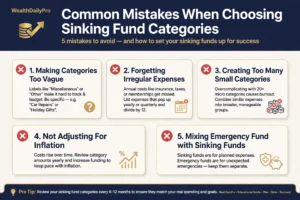
- Trying to fund too many categories at once: This often leads to underfunding all of them rather than fully funding a few.
- Ignoring categories with irregular timing: Costs like car repairs don’t follow a predictable schedule, but that doesn’t mean they shouldn’t have a dedicated fund.
- Not adjusting contribution amounts over time: As you get closer to a known expense date, you may need to increase contributions to stay on track.
- Confusing sinking funds with your emergency fund: Sinking fund categories are for known, planned expenses — not for the unexpected emergencies your emergency fund is meant to cover.
Frequently Asked Questions
How many sinking fund categories should I have? There’s no fixed number, but starting with 2–3 of your most pressing or highest-impact categories tends to be more manageable than trying to fund ten categories at once.
Should every sinking fund category get the same amount each month? Not necessarily. Contribution amounts should generally reflect the cost and timeline of each specific expense, meaning some categories may require larger monthly contributions than others.
Can sinking fund categories overlap with a budget category? Yes, and that’s normal. For example, “car maintenance” might appear both as a small monthly budget line and as a sinking fund category for larger, less frequent repairs.
Final Thoughts

Choosing the right sinking fund categories comes down to identifying which known expenses are most likely to disrupt your budget if left unplanned. Start small with two or three categories that address your most immediate or highest-impact upcoming costs, and expand from there as your budget allows.
Disclaimer: This article is for general informational and educational purposes only and does not constitute personalized financial advice. Please consult a qualified financial professional before making decisions about your personal finances.
1 thought on “Sinking Fund Categories: 10 Ideas to Start With”