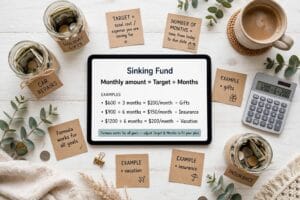
The easiest way to understand a sinking fund is to see real ones. These sinking fund examples show exactly what people save for, how much they put aside each month, and how the money gets used when the bill arrives. Each example includes real dollar amounts so you can copy the idea and adjust it to your own budget.
In this guide you will find ten sinking fund examples, three sample plans for different households, and a month-by-month story of how a car repair fund works in real life. If you are brand new to the idea, start with our guide on what is a sinking fund.
Sinking Fund Examples at a Glance
Here are ten common sinking fund examples with a yearly goal and the monthly amount needed to reach it. These numbers are examples, so replace them with your own estimates:
| Sinking Fund | Yearly Goal | Monthly Amount |
|---|---|---|
| Car maintenance and repairs | $1,200 | $100 |
| Annual insurance premium | $960 | $80 |
| Holiday gifts | $600 | $50 |
| Vacation | $1,800 | $150 |
| Medical and dental costs | $600 | $50 |
| Home maintenance | $1,500 | $125 |
| Pet and vet care | $480 | $40 |
| Annual subscriptions | $240 | $20 |
| Back-to-school and kids’ activities | $600 | $50 |
| Registration, taxes, and fees | $360 | $30 |
| Total | $8,340 | $695 |
Nobody needs all ten at once. Most people start with two or three and add more over time. Let’s look at each example in detail.
10 Real-Life Sinking Fund Examples
1. Car Maintenance and Repairs
Goal: $1,200 a year. Monthly amount: $100.
This is one of the most useful sinking fund examples, because every car eventually needs brakes, tires, or a repair. Use last year’s maintenance bills as your guide, and raise the amount if your car is older.
2. Annual Insurance Premium
Goal: $960 a year. Monthly amount: $80.
If you pay car, home, or renters insurance once or twice a year instead of monthly, a sinking fund turns a large bill into a small habit. The due date is fixed, so this fund should come first when money is tight.
3. Holiday Gifts
Goal: $600 a year. Monthly amount: $50.
Holiday spending is predictable, yet it surprises many budgets every December. Saving $50 a month means you can shop without a credit card.
4. Vacation
Goal: $1,800 a year. Monthly amount: $150.
A travel fund lets you take a trip without debt. Decide on a realistic budget, divide it by the months until you travel, and watch the balance grow.
5. Medical and Dental Costs
Goal: $600 a year. Monthly amount: $50.
Copays, prescriptions, glasses, and dental work are not emergencies, but they are not monthly either. A dedicated fund keeps them from disrupting your regular budget.
6. Home Maintenance
Goal: $1,500 a year. Monthly amount: $125.
Homeowners face repairs such as a water heater, roof work, or appliance replacement. Renters can use a smaller version for household items and moving costs.
7. Pet and Vet Care
Goal: $480 a year. Monthly amount: $40.
Yearly checkups, vaccines, and medication add up. This fund also gives you a small buffer for unexpected visits.
8. Annual Subscriptions and Memberships
Goal: $240 a year. Monthly amount: $20.
Software, memberships, and annual renewals often come out as one big charge. Spreading them across the year prevents surprise withdrawals.
9. Back-to-School and Kids’ Activities
Goal: $600 a year. Monthly amount: $50.
School supplies, clothes, sports fees, and camps arrive in clusters. A family fund helps you pay each one without scrambling.
10. Registration, Taxes, and Fees
Goal: $360 a year. Monthly amount: $30.
Vehicle registration, property taxes, license renewals, and professional fees have fixed due dates. Saving a little each month makes them painless.
Sinking Fund Examples for Different Households
The best sinking fund examples depend on your life. Here are three sample plans, built from the funds above:
| Household | Monthly Take-Home Pay | Funds Included | Monthly Total | Share of Pay |
|---|---|---|---|---|
| Single renter | $3,200 | Car $75, gifts $40, medical $40, vacation $100, subscriptions $15 | $270 | About 8% |
| Couple, one car | $5,500 | Car $125, insurance $100, gifts $75, vacation $200, medical $75 | $575 | About 10% |
| Family with a home | $6,000 | Car $150, home $200, insurance $100, gifts $100, school $75, medical $75, vacation $100 | $800 | About 13% |
Homeowners and families often need a larger share, because they have more irregular costs. Treat these as starting points, and read our guide on how much to put in a sinking fund to calculate your own totals.
A Year in the Life of a Car Repair Fund
Among all sinking fund examples, a car repair fund shows best how the system works. Imagine you save $100 a month for a car fund:
| Month | What Happens | Fund Balance |
|---|---|---|
| 1 to 5 | You save $100 each month | $500 |
| 5 | Brake repair costs $380 | $120 |
| 6 to 10 | You save $100 each month | $620 |
| 10 | New tires cost $560 | $60 |
| 11 to 12 | You save $100 each month | $260 |
By the end of the year, you saved $1,200 and spent $940 on two real repairs, without touching a credit card. The remaining $260 rolls into next year’s fund. Without a sinking fund, those same repairs would have felt like two financial emergencies.
More Sinking Fund Ideas to Consider
If none of the examples above fit, here are more ideas people use:
- New phone or laptop. Replace electronics without financing.
- Moving costs. Deposits, trucks, and setup costs add up fast.
- Wedding or event costs. Guest travel, gifts, and outfits.
- Next car down payment. Start saving long before the old car dies.
- Hobby gear. Cameras, instruments, and sports equipment.
For a longer list organized by type, see our guide to sinking fund categories.
How to Choose Your Own Sinking Fund Examples
Use these steps to turn the examples above into your own plan:
- Review last year’s statements. Find expenses that did not occur every month.
- Pick the two or three that hurt the most. Start small so the habit sticks.
- Estimate a yearly cost for each. Use real bills as a guide.
- Divide by 12. That is your monthly contribution.
- Automate the transfers. Move the money on payday.
For the complete walkthrough, follow our guide on how to create a sinking fund.
Where to Keep Your Sinking Funds
Keep each fund separate from your everyday checking account. A savings account with named buckets or sub-accounts works well. If you use a bank, confirm that it is insured on the FDIC website. Keep sinking funds separate from your emergency savings too, as explained in our comparison of sinking fund vs emergency fund.
How Sinking Funds Fit Your Budget
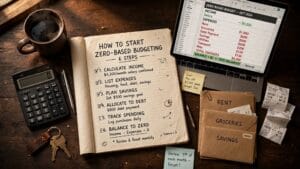
Sinking fund contributions belong in the 20% savings category of the 50/30/20 rule, or on their own lines in a zero-based plan. For a broader overview of budgeting methods, read our complete guide on how to budget. To turn your list of funds into monthly amounts quickly, try our free Sinking Fund Planner.
Sinking Fund Examples by Pay Schedule
If you are not paid monthly, you can split each monthly total across your paychecks. The table below converts the three household plans above. Multiply the monthly amount by 12 and divide by the number of paychecks in a year:
| Household | Monthly Total | Weekly (52) | Biweekly (26) | Twice a Month (24) |
|---|---|---|---|---|
| Single renter | $270 | $62.31 | $124.62 | $135.00 |
| Couple, one car | $575 | $132.69 | $265.38 | $287.50 |
| Family with a home | $800 | $184.62 | $369.23 | $400.00 |
If you are paid biweekly, two months each year have three paychecks. That is a convenient moment to give your funds an extra boost without changing your regular budget.
Which Sinking Fund Examples Should You Start With?
You do not have to fund everything on the same day. Use this simple order to decide which sinking fund examples to start with first:
- Fixed due dates. Insurance, registration, and taxes cannot be postponed, so they go first.
- Expensive and likely surprises. Car repairs, home maintenance, and medical costs come next.
- Predictable seasonal spending. Holiday gifts and back-to-school costs follow.
- Goals and fun. Vacation and hobby funds are last, but still worth having.
How to Name and Organize Your Sinking Funds
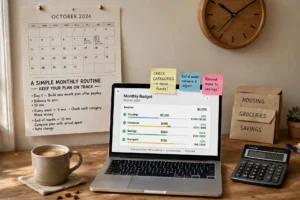
Clear names make a fund harder to raid. Use specific labels such as “Car repairs” or “Holiday 2026” instead of a vague name like “Savings 2.” If your bank allows sub-accounts or savings buckets, create one for each fund. If not, a simple spreadsheet with a column for each fund’s balance works just as well. Check your balances once a month, and you will always know where you stand.
What If a Sinking Fund Is Not Enough?
Sometimes a bill is larger than the balance. In the car repair story above, imagine the tires cost $900 instead of $560. Here is what to do:
- Use flexible money first. Cover the gap from the wants category of your budget for a month or two.
- Avoid your emergency fund unless it is truly urgent. That money exists for real surprises.
- Raise next year’s target. A shortfall is a sign that your estimate was too low.
Even a partly funded plan beats having no sinking fund at all. The best sinking fund examples are the ones you adjust as you learn what your real costs are.
Common Mistakes With Sinking Funds
- Starting too many funds at once. Begin with two or three, then add more.
- Copying someone else’s numbers exactly. Use these sinking fund examples as a guide, then adjust to your own bills.
- Mixing funds with emergency savings. Keep planned costs and surprises separate.
- Leaving money in checking. It blends into spending money and disappears.
- Never updating the amounts. Review once a year as prices change.
Frequently Asked Questions About Sinking Fund Examples
What are some examples of sinking funds?
Common sinking fund examples include car repairs, holiday gifts, vacations, annual insurance, medical costs, home maintenance, pet care, and back-to-school expenses.
How many sinking funds should I have?
Start with two or three and add more as your budget grows. Many people end up with between three and eight funds.
How much should I put in each sinking fund?
Divide the expected yearly cost by 12, or by the number of months until the due date. For example, $1,200 for car repairs is $100 a month.
What is the most common sinking fund?
Car maintenance and holiday gifts are two of the most common, because almost everyone has those expenses.
Can I use sinking fund examples if I have an irregular income?
Yes. Instead of fixed amounts, set aside a percentage of every payment, such as 5% to 10%, and divide it between your funds.
Is a sinking fund the same as an emergency fund?
No. A sinking fund is for expenses you can predict, while an emergency fund is for real surprises. Keep them separate.
Final Thoughts
The best sinking fund examples are the ones that match your real bills. Start with the two or three expenses that cause the most stress, divide each yearly cost by 12, and automate the transfers. After a few months, you will notice that bills which used to feel like emergencies are simply expenses you were ready for.
Ready to build your own plan? Use our Sinking Fund Planner to calculate your monthly amounts, and read our guide to sinking fund categories to find more ideas.
This article is for educational purposes only and is not financial advice. Consider speaking with a qualified professional about your specific situation.