
If you’re searching for sinking fund examples, you’ve probably already discovered how useful this savings method is — but figuring out exactly which sinking funds you should have is where most people get stuck. This guide gives you a complete, categorized list of 50 sinking fund examples, organized by how often each expense comes up, so you can build a system that actually matches your life instead of guessing.
If you’re brand new to the concept, a sinking fund is simply money you set aside gradually, in advance, for an expense you know is coming — instead of scrambling to cover it (or reaching for a credit card) when it arrives. For a full breakdown of how the method works, see our guide on what a sinking fund is.
How to Use This List of Sinking Fund Examples
You don’t need all 50 of these sinking fund examples — that would be overwhelming and unnecessary. Instead, read through each category, and mentally check off the ones that apply to your actual life. A good starting point is picking 3-5 sinking funds that cover your biggest known upcoming expenses, then adding more over time as your budget allows.
Yearly and Seasonal Sinking Fund Examples
These are expenses that come around once a year but can catch you off guard if you’re not planning for them monthly.
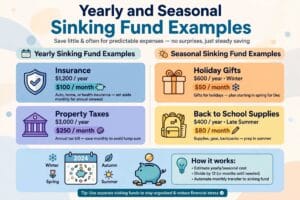
- Holiday gifts — spread the cost across 12 months instead of one expensive December
- Back-to-school supplies — clothes, supplies, and fees that hit every fall
- Annual insurance premiums — car, home, or life insurance billed yearly
- Property taxes — a predictable annual bill that’s easy to underestimate
- Car registration and inspection — small but recurring yearly cost
- Annual memberships — gym, warehouse clubs, professional associations
- Tax preparation fees — accountant or software costs each spring
- Summer camp or childcare — seasonal costs for parents
- Holiday travel — flights or gas for annual family visits
- New Year/Birthday celebrations — recurring annual events worth planning for
Home-Related Sinking Fund Examples
Homeownership comes with irregular but predictable costs that are easy to forget until they show up.

- Home maintenance and repairs — roof, plumbing, appliances
- HVAC servicing or replacement — a major cost that eventually comes due
- Furniture and appliance replacement — nothing lasts forever
- Lawn and garden equipment — mowers, tools, seasonal supplies
- Home renovation projects — even small updates add up
- Pest control — often billed quarterly or annually
- Exterior maintenance — gutter cleaning, pressure washing, painting
- Home security system — installation or annual contract costs
Vehicle-Related Sinking Fund Examples
Cars are one of the most common reasons people reach for a credit card — a dedicated sinking fund changes that.
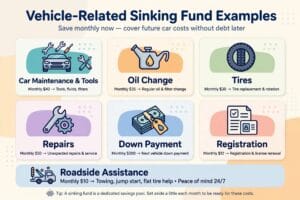
- Car maintenance — oil changes, tires, routine service
- Car repairs — unexpected but common mechanical issues
- New vehicle down payment — saving ahead for your next car
- Car replacement fund — for paying cash for your next vehicle entirely
- License and registration renewal — small recurring cost
- Emergency roadside costs — towing, jump starts, lockouts
Family and Personal Sinking Fund Examples
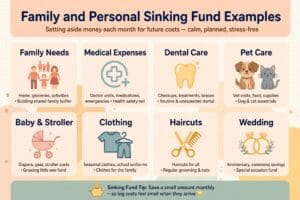
- Medical and dental expenses — copays, procedures, out-of-pocket costs
- Prescription and vision costs — recurring but variable healthcare spending
- Pet care and vet bills — routine and unexpected pet expenses
- Wedding costs — whether it’s yours or attending someone else’s
- Baby or new child expenses — a major life event with major costs
- Clothing budget — seasonal wardrobe updates for the whole family
- Haircuts and grooming — recurring personal care costs
- Life events fund — graduations, anniversaries, celebrations
Travel and Lifestyle Sinking Fund Examples

- Annual vacation — the most popular sinking fund example for a reason
- Weekend getaways — smaller, more frequent trips
- Concert or event tickets — planned entertainment expenses
- Hobbies and equipment — gear replacement or upgrades
- Subscriptions paid annually — software, streaming bundles, memberships
- Electronics and tech upgrades — phones, laptops, and gadgets
Financial and Future-Planning Sinking Fund Examples

- Emergency fund top-off — replenishing after you’ve had to dip in
- Down payment savings — for a home or major purchase
- Business expenses — for freelancers or small business owners
- Continuing education or certifications — career-related costs
- Charitable giving — planned annual or holiday donations
- Legal or professional fees — occasional but significant costs
Miscellaneous Sinking Fund Examples Worth Considering
- Moving expenses — if a move is anywhere on your horizon
- Replacement fund for big-ticket items — mattresses, laptops, furniture
- Annual physical or wellness costs — checkups not fully covered by insurance
- Gift fund for others — beyond holidays, for birthdays and events year-round
- Home office equipment — for remote workers
- “Just in case” miscellaneous fund — a flexible catch-all for anything not listed above
Not sure how to actually set these up and track them? Our free Sinking Fund Planner lets you create and track multiple funds at once, with automatic monthly savings targets calculated for you.
How to Choose Which Sinking Funds You Actually Need
With 50 sinking fund examples on this list, trying to fund all of them at once isn’t realistic for most budgets. Here’s how to prioritize:

1. Start With Expenses You Know Are Coming
Look at your calendar and bank statements from the past 12 months. Anything that repeated — even once — is a candidate for its own sinking fund.
2. Prioritize the Expenses That Have Hurt You Before
If a car repair or holiday season has ever thrown your budget off in the past, that’s a strong signal it deserves a dedicated fund first.
3. Combine Small, Related Categories
You don’t need 10 separate tiny funds. Combining categories like “clothing” and “haircuts” into one “personal care” fund keeps things manageable, especially when you’re just starting out.
4. Add New Sinking Funds Gradually
Start with 3-5 funds that matter most right now. As those become habits and your budget has more breathing room, add more categories from this list over time.
How Much to Save in Each Sinking Fund
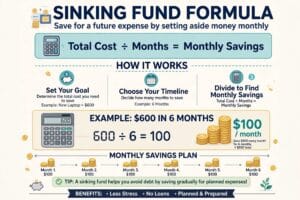
The math behind every sinking fund is the same, regardless of category:
Total Expected Cost ÷ Months Until You Need It = Monthly Savings Amount
For example, if holiday gifts typically cost you $600 and you start saving in January, that’s $600 ÷ 12 months = $50 per month. By December, the money is already there — no debt, no stress, no scrambling.
Common Mistakes With Sinking Fund Categories
- Creating too many funds at once. Overwhelm is the #1 reason people abandon the sinking fund method within the first month.
- Keeping all sinking funds in one account with no separation. Without clear labels or separate sub-accounts, it’s easy to accidentally spend from the wrong fund.
- Forgetting to restart funds after using them. Once a sinking fund is spent (holiday gifts, for example), restart contributions immediately for next year rather than waiting until the expense is close again.
- Not adjusting amounts as costs change. Review your sinking fund targets annually, since costs like insurance premiums and holiday spending tend to increase over time, a pattern consistent with general consumer price inflation data from the Bureau of Labor Statistics.
Final Thoughts
This list of sinking fund examples isn’t meant to be a checklist you complete all at once — it’s a menu to choose from based on what actually shows up in your life. Start with the categories that have caused you the most financial stress in the past, build the habit of consistent monthly contributions, and expand your sinking fund system gradually from there.
Ready to put this into practice? Try our free Sinking Fund Planner to set up your first few funds and see exactly how much to save each month to stay ahead of every expense on this list.
3 thoughts on “50 Sinking Fund Examples: The Complete List for 2026”