
Introduction
One of the biggest myths in personal finance is that you need thousands of dollars to start investing. In reality, thanks to modern investment platforms, fractional shares, and low minimum-deposit accounts, you can start investing with as little as $5 to $50. The real barrier for most beginners isn’t money — it’s not knowing where to begin.
This guide breaks down exactly how to start investing with little money, the safest options for beginners, and mistakes that commonly trip up new investors.https://wealthdailypro.com/category/personal-finance/
Why Starting Small Still Matters

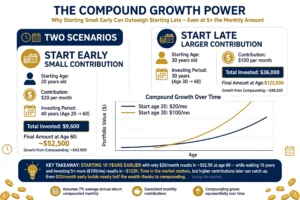
Many people delay investing because they believe small amounts “aren’t worth it.” This mindset can be costly. Thanks to compound growth, money invested early — even in small amounts — has more time to grow. Someone who consistently invests small amounts starting in their twenties can often build significantly more wealth over time than someone who waits to invest larger sums later, simply because of the extra years of potential growth.
Starting small also allows beginners to learn the mechanics of investing — how markets move, how to research options, and how to manage emotions during market swings — without risking large sums of money.
Step 1: Set a Clear Investing Goal
Before choosing where to invest, define what you’re investing for. Common goals include:
- Retirement (long-term, 20+ years)
- A major purchase, like a home down payment (medium-term, 3–10 years)
- General wealth building (long-term, flexible)
Your goal affects your time horizon, which in turn affects how much risk may be appropriate for your situation.
Step 2: Build a Small Emergency Fund First
Before investing, most financial professionals recommend having a basic emergency fund — even a small one covering one to two months of essential expenses. This helps prevent a situation where you’re forced to sell investments at a loss because of an unexpected expense.
Step 3: Choose a Beginner-Friendly Platform
Look for investment platforms or brokerage apps that offer:
- No or low account minimums
- Fractional share investing (allowing you to buy a portion of an expensive stock rather than a full share)
- Low or no trading commissions
- Educational resources for beginners
Fractional shares in particular have made it possible for beginners to invest in well-known companies without needing hundreds of dollars for a single share.
Step 4: Understand Your Beginner-Friendly Options
Index Funds and ETFs
Index funds and exchange-traded funds (ETFs) pool money from many investors to buy a broad basket of stocks or bonds. Because they’re diversified across many companies, they tend to carry lower risk than picking individual stocks, making them a popular starting point for beginners.
Robo-Advisors
Robo-advisors are automated platforms that build and manage a diversified portfolio based on your goals and risk tolerance. They’re a hands-off option for beginners who want to invest without researching individual stocks.
Individual Stocks
Buying shares of individual companies offers more control but comes with higher risk, since your investment is tied to the performance of a single company rather than a diversified fund. This option is generally better suited for investors willing to research companies thoroughly.
High-Yield Savings Accounts (For Short-Term Goals)
While not technically an “investment” in the traditional sense, a high-yield savings account can be a reasonable place for money you’ll need within the next couple of years, since it isn’t exposed to market volatility.https://www.investopedia.com/
Step 5: Automate Your Contributions
Just like with saving, automating your investments can help remove emotion and inconsistency from the process. Many platforms allow you to set up recurring investments — for example, a fixed amount every payday — which can also help smooth out the effects of market ups and downs over time, a strategy commonly known as dollar-cost averaging.
Common Beginner Investing Mistakes to Avoid
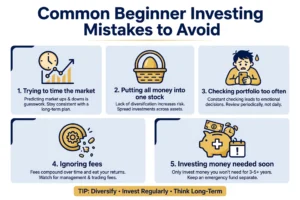
- Trying to time the market: Waiting for the “perfect” moment to invest often resu
lts in never starting at all. - Putting all your money into one stock: Lack of diversification significantly increases risk.
- Checking your portfolio too often: Frequent checking during market dips can lead to panic-selling, which locks in losses.
- Ignoring fees: High management fees can quietly erode returns over time. Always check a platform’s fee structure before investing.
- Investing money you might need soon: Money needed within the next couple of years is generally better kept in a safer, more liquid account.
Frequently Asked Questions
Is it worth investing small amounts of money? Yes. Thanks to compound growth, consistently investing even small amounts over time can add up significantly, especially when started early.
How much money do I need to start investing? Many platforms today allow you to start investing with as little as $5–$50, particularly through fractional shares or robo-advisors.
What’s the safest way for a beginner to start investing? Diversified options like index funds or ETFs are generally considered lower-risk starting points compared to individual stocks, though all investments carry some level of risk.
Final Thoughts
You don’t need a large sum of money or advanced financial knowledge to start investing. What matters most is starting consistently, choosing beginner-friendly options, and giving your money time to grow. Even small, regular contributions can add up meaningfully over the years.
Disclaimer: This article is for general informational and educational purposes only and does not constitute personalized financial or investment advice. All investments carry risk, including the potential loss of principal. Please consult a licensed financial advisor before making investment decisions.