
Learning how to create a budget is the single most effective step you can take toward financial control. If you’ve ever reached the end of the month wondering where your paycheck went, you’re not alone — most people who track their spending save more money, not because they earn more, but because they finally see where it’s going.
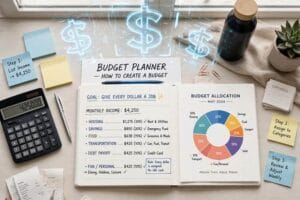
A budget isn’t about restriction. It’s about giving every dollar a job before it disappears into random purchases, subscriptions you forgot about, or one too many takeout orders. In this guide, you’ll learn exactly how to create a budget that fits your real life, not someone else’s spreadsheet template.
Why Most Budgets Fail (And How to Avoid It)
Before diving into the steps, it’s worth understanding why so many people give up on budgeting within the first month. The usual culprits are:
- Being too restrictive. Cutting out every small joy — coffee, takeout, streaming services — makes a budget feel like punishment instead of a plan.
- Not tracking irregular expenses. Car repairs, annual subscriptions, and holiday gifts blow up “perfect” budgets because they weren’t planned for.
- Using someone else’s numbers. A budget built around national averages rarely matches your actual cost of living, income, or goals.
- Giving up after one bad month. A budget is a living plan, not a one-time test you either pass or fail.
The good news: once you build a budget around your actual habits instead of an idealized version of yourself, it becomes far easier to stick with.
Step 1: Calculate Your Real Monthly Income
Start with the number you actually take home, not your gross salary. If your income varies — freelance work, tips, commission — use the average of your last three to six months as a conservative baseline.

If you have multiple income sources, add them all together:
- Primary job take-home pay
- Side hustle or freelance income
- Passive income (dividends, rental income, etc.)
- Any other recurring income
This total is your budgeting baseline — the amount you have to work with each month.
Step 2: List Every Expense (Yes, Every One)
This step is where most people underestimate their spending. Go through your last two to three months of bank and credit card statements and categorize every transaction. Group them into:
- Fixed expenses: rent or mortgage, insurance, loan payments, subscriptions
- Variable necessities: groceries, utilities, gas, phone bill
- Discretionary spending: dining out, entertainment, shopping, hobbies
- Irregular expenses: car maintenance, gifts, annual memberships, medical costs

That last category is the one people forget most often — and it’s usually the reason a budget falls apart three months in. A simple fix is to average irregular costs over 12 months and set aside a small amount for them every month. This is exactly what a sinking fund is designed to solve.
Step 3: Choose a Budgeting Method That Fits Your Life
There’s no single “correct” way to create a budget — the best method is the one you’ll actually use. Here are three popular approaches:
The 50/30/20 Rule
Allocate 50% of income to needs, 30% to wants, and 20% to savings and debt repayment. This is a great starting point if you want simplicity without tracking every category in detail.
Zero-Based Budgeting
Every dollar is assigned a job — income minus expenses minus savings should equal zero. This method gives you the most control but requires more upfront planning.
The Pay-Yourself-First Method
Automatically move a set amount into savings the moment you’re paid, then budget the rest for expenses. This works well for people who struggle to save what’s “left over” at the end of the month, because there usually isn’t anything left.

You can try our free Budget Calculator to instantly see how your income breaks down using the 50/30/20 approach.
Step 4: Build In Room for Real Life
A budget that assumes perfect behavior every single month is a budget destined to fail. Build in a small “miscellaneous” or “fun money” category — even $30–$50 a month — so unplanned small expenses don’t derail your entire plan or make you feel like you failed.
This single change is often the difference between a budget that lasts a few weeks and one that becomes a permanent habit.
Step 5: Review and Adjust Monthly
Your first month’s budget is a draft, not a final answer. At the end of each month, compare what you planned to spend against what you actually spent. Ask yourself:
- Which categories were consistently over budget?
- Were there expenses you forgot to include?
- Did any goals shift — a new expense, a raise, a change in priorities?
Adjust the numbers and try again. After two or three months of this cycle, your budget will reflect your actual life far more accurately than any template ever could.

Common Budgeting Mistakes to Avoid
- Forgetting annual expenses: car registration, subscriptions billed yearly, holiday spending.
- Setting unrealistic savings goals: jumping straight to saving 30% of income when you’re starting from zero often leads to giving up. Start smaller and increase over time.
- Not having an emergency fund first: without one, a single unexpected expense can undo months of budgeting progress. If you don’t have one yet, our Emergency Fund Calculator can help you figure out a target.
- Tracking manually forever: spreadsheets work, but automating your tracking (bank apps, budgeting apps) removes the friction that causes most people to quit.
Final Tips on How to Create a Budget That Lasts
A budget isn’t a one-time project — it’s an ongoing conversation with your money. The goal isn’t perfection in month one; it’s building a system flexible enough to survive real life while still moving you toward your goals.
Start simple: calculate your income, track your spending for a month, pick one method, and adjust from there. Small, consistent adjustments beat an ambitious plan you abandon by week two.

For additional guidance on setting realistic financial goals, the Consumer Financial Protection Bureau offers free, unbiased budgeting worksheets and tools.
Final Thoughts
Now that you know how to create a budget step by step, the hardest part is simply getting started. Ready to see your numbers in action? Try our free Budget Calculator and get your personalized 50/30/20 breakdown in seconds — no sign-up required.
1 thought on “How to Create a Budget That Actually Works: 5-Step Guide”