
Learning how to improve your credit score can save you thousands of dollars over your lifetime — better rates on mortgages, car loans, credit cards, and even lower insurance premiums in many states. The good news is that improving your credit score doesn’t require complicated tricks, just consistent habits applied over time. This guide covers 9 proven steps to help you raise your score, starting today.
How Your Credit Score Is Calculated
Before diving into how to improve your credit score, it helps to understand what actually determines it. The most widely used scoring model weighs five factors:
- Payment history (35%): Whether you pay bills on time
- Credit utilization (30%): How much of your available credit you’re using
- Length of credit history (15%): How long your accounts have been open
- Credit mix (10%): The variety of credit types you have
- New credit (10%): How many new accounts or inquiries you’ve had recently
Knowing these weights helps explain why some actions move your score faster than others — and why there’s no single “trick” that fixes everything overnight.

Step 1: Pay Every Bill on Time, Every Time
Since payment history is the single biggest factor, this is the most important habit for anyone learning how to improve your credit score. Even one 30-day late payment can significantly drop your score and stay on your report for years.
Set up autopay for at least the minimum payment on every account, so a missed payment never happens due to forgetfulness. If you’re worried about overdrafting, set a calendar reminder a few days before each due date as a backup.
Step 2: Lower Your Credit Utilization Ratio
Credit utilization — the percentage of your available credit you’re currently using — is the second biggest factor. As a general rule, keeping utilization under 30% is good, and under 10% is considered excellent for anyone focused on how to improve their credit score quickly.
Ways to lower utilization:
- Pay down existing balances, even in small increments throughout the month
- Ask for a credit limit increase on an existing card (without using the extra limit)
- Pay your balance before the statement closing date, not just the due date

Step 3: Don’t Close Old Credit Cards
It might feel responsible to close a credit card you no longer use, but doing so can actually hurt your score in two ways: it reduces your total available credit (raising your utilization ratio) and shortens your average account age. Unless the card has a high annual fee that isn’t worth it, keeping old accounts open — even with occasional small purchases — generally helps your score.
Step 4: Check Your Credit Report for Errors
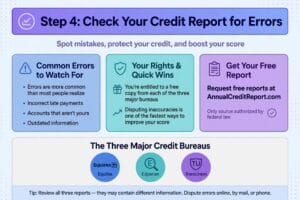
Errors on credit reports are more common than most people realize — incorrect late payments, accounts that aren’t yours, or outdated information. You’re entitled to a free copy of your credit report from each of the three major bureaus, and disputing inaccuracies is one of the fastest ways to improve your credit score when an error is dragging it down unfairly.
You can request your free reports at AnnualCreditReport.com, the only source authorized by federal law for free credit reports.
Step 5: Become an Authorized User on a Trusted Account
If a family member has a credit card with a long history and low utilization, asking to be added as an authorized user can boost your score, since that account’s positive history may be reflected on your report. This works especially well for people with thin or new credit files.
Step 6: Diversify Your Credit Mix (Carefully)
Having a mix of credit types — a credit card, an installment loan, maybe a car loan — can help your score slightly, since it shows you can manage different kinds of credit responsibly. That said, this is a smaller factor, and opening new accounts purely to “diversify” often does more harm than good in the short term. Let this happen naturally rather than forcing it.
Step 7: Limit New Credit Applications
Every time you apply for new credit, a hard inquiry appears on your report, which can cause a small, temporary dip in your score. Multiple applications in a short period can compound this effect and signal risk to lenders. If you’re focused on how to improve your credit score before a major purchase like a mortgage, avoid opening new accounts in the months leading up to your application.
Step 8: Keep Old Debt Accounts Accurate and Paid Off
If you have older debts — collections, charged-off accounts — verify they’re being reported accurately and, where possible, work toward paying them off or negotiating settlements. Even paid collections can remain on your report for years, but a paid status looks better to lenders than an unpaid one, and some newer scoring models weigh paid collections less heavily.

Step 9: Be Patient and Consistent
Unlike some financial goals, improving your credit score doesn’t happen overnight. Significant improvement typically takes a few months of consistent positive behavior, and rebuilding from serious negative marks (like a missed payment or collection) can take longer. The habits that improve your score are the same ones that build strong financial health overall — on-time payments, low utilization, and patience.
While you’re building better credit habits, it’s also worth building a cash cushion so you’re less reliant on credit for emergencies. Our free Emergency Fund Calculator can help you set a savings target.
How Long Does It Take to See Results?
Timelines vary based on your starting point:
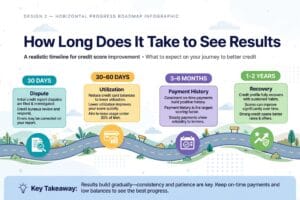
- Lowering utilization: Can show results within 1-2 billing cycles (30-60 days)
- Disputing an error: Typically resolved within 30 days, with score updates shortly after
- Building payment history: Meaningful improvement usually takes 3-6 months of consistent on-time payments
- Recovering from major negative marks: Can take 1-2 years for significant score recovery, though the impact lessens over time
Common Mistakes That Hurt Your Credit Score
- Maxing out credit cards, even temporarily. High utilization at any point in the billing cycle can be reported and affect your score, even if you pay it off in full each month.
- Co-signing loans without understanding the risk. A co-signed loan affects your credit just as much as it affects the primary borrower’s.
- Ignoring small, forgotten bills. A single missed medical or utility bill sent to collections can significantly impact your score.
- Closing your oldest credit card. This shortens your credit history length and raises utilization at the same time — a double negative.
- Applying for too many cards at once when chasing sign-up bonuses, which can trigger multiple hard inquiries in a short window.
Building Credit From Scratch
If you’re starting with no credit history at all, a few beginner-friendly options can help:
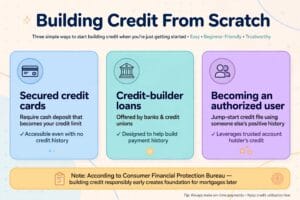
- Secured credit cards: Require a cash deposit that becomes your credit limit, making them accessible even with no credit history.
- Credit-builder loans: Offered by some banks and credit unions specifically designed to help build payment history.
- Becoming an authorized user: As mentioned earlier, this can jump-start a credit file using someone else’s positive history.
According to the Consumer Financial Protection Bureau, building credit responsibly early on creates a foundation that pays off significantly when applying for larger loans like mortgages later in life.
Final Thoughts
Knowing how to improve your credit score comes down to a handful of consistent habits: pay on time, keep utilization low, avoid unnecessary new credit, and be patient. There’s no shortcut that replaces time and consistency, but the steps in this guide will move your score in the right direction faster than most people realize.
As your credit improves, pairing it with a solid financial foundation matters just as much. Check out our guide on how to create a budget that actually works to make sure your overall financial plan supports your credit goals long-term.