You don’t need a finance degree or a six-figure portfolio to invest like a pro. Professional investors don’t succeed because of secret formulas — they succeed by consistently following a small set of disciplined rules that most beginners skip. This guide breaks down 10 of those rules, so you can start investing like a pro from your very first contribution, not just after years of trial and error.
Rule 1: Invest Like a Pro by Starting With a Plan, Not a Stock Pick
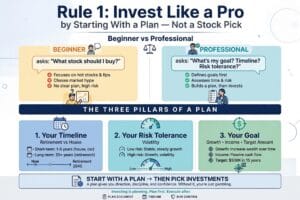
Beginners often ask “what stock should I buy?” first. Professionals ask “what’s my goal, timeline, and risk tolerance?” first. Before investing a single dollar, define:
- Your timeline — retirement in 30 years looks very different from a house down payment in 3 years
- Your risk tolerance — how much volatility can you handle without panic-selling
- Your goal — growth, income, or a specific target amount
Every decision that follows should support this plan, not react to headlines or hot tips.
Rule 2: Diversify Instead of Chasing Single Winners
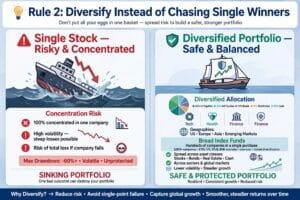
One of the clearest ways to invest like a pro is avoiding concentration risk. Professional portfolios are spread across multiple asset classes, sectors, and geographies — not because diversification is exciting, but because it protects against any single investment sinking the entire portfolio.
For most beginners, broad index funds accomplish this instantly, offering exposure to hundreds or thousands of companies in a single purchase, rather than trying to pick individual winners.
Rule 3: Keep Costs and Fees Low
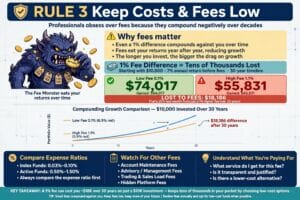
Professionals obsess over fees because they compound negatively over decades, just like returns compound positively. A 1% annual fee difference can cost tens of thousands of dollars over a 30-year investing timeline. To invest like a pro:
- Compare expense ratios before choosing funds
- Watch for account maintenance or advisory fees
- Understand exactly what you’re paying for, and whether it’s worth it.
Rule 4: Automate Contributions
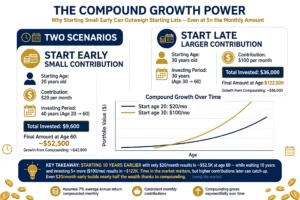
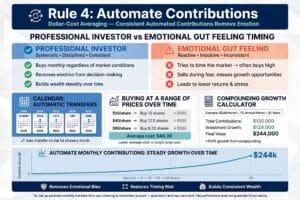
Professional investors rarely time the market with lump sums based on gut feeling. Instead, they use consistent, automated contributions — a strategy known as dollar-cost averaging. This removes emotion from the timing decision entirely and ensures you’re buying at a range of prices over time, rather than trying to guess the “perfect” moment.
Want to see how consistent contributions compound over time? Try our free Investment Growth Calculator to visualize your own numbers.
Rule 5: Invest Like a Pro by Ignoring Short-Term Noise
Daily market swings, breaking financial news, and social media hot takes are designed to grab attention — not to inform long-term decisions. Professionals filter out this noise almost entirely, checking portfolios periodically rather than obsessively, and making changes based on their plan, not headlines.
Rule 6: Understand What You’re Actually Investing In
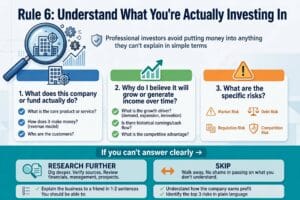
Professional investors avoid putting money into anything they can’t explain in simple terms. Before buying any investment, you should be able to answer:
- What does this company or fund actually do?
- Why do I believe it will grow or generate income over time?
- What are the specific risks?
If you can’t answer these clearly, that’s usually a sign to research further — or skip it entirely.
Rule 7: Rebalance Periodically
Over time, some investments grow faster than others, shifting your portfolio away from its original target allocation. Professionals periodically rebalance — selling a portion of what’s grown and buying more of what’s lagged — to maintain their intended risk level, rather than letting winners silently take over the portfolio’s risk profile.
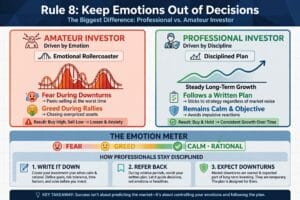
Rule 8: Keep Emotions Out of Decisions
This is arguably the single biggest difference between professional and amateur investors. Fear during downturns leads to panic-selling at the worst possible time; greed during rallies leads to chasing overpriced assets. To invest like a pro:
- Write down your investment plan when you’re calm and rational
- Refer back to it during volatile periods instead of reacting emotionally
- Remember that market downturns are a normal, expected part of long-term investing, not a sign something is broken
Rule 9: Maximize Tax-Advantaged Accounts First
Before investing in a standard taxable brokerage account, professionals typically max out available tax-advantaged options first — employer retirement plans (especially with any matching contribution), IRAs, and other tax-deferred or tax-free accounts. This single habit can meaningfully increase long-term returns simply by reducing the tax drag on growth.
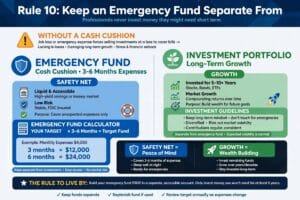
Rule 10: Keep an Emergency Fund Separate From Investments
Professionals never invest money they might need in the short term. Without a separate cash cushion, a job loss or emergency expense can force you to sell investments at a loss just to cover bills. Before investing aggressively, build a starter emergency fund using our free Emergency Fund Calculator to determine your target.
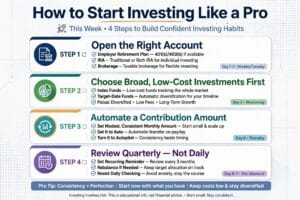
How to Start Investing Like a Pro This Week
Step 1: Open the Right Account
Depending on your goals, this might be an employer retirement plan, an IRA, or a standard brokerage account. Choose based on your timeline and whether tax advantages apply.
Step 2: Choose Broad, Low-Cost Investments First
Index funds or target-date funds are a reasonable starting point for most beginners — instantly diversified, low fees, and no stock-picking required while you build knowledge and confidence.
Step 3: Automate a Contribution Amount
Even a modest, consistent monthly contribution set up on autopilot beats sporadic, larger investments made only when you “remember” or feel motivated.
Step 4: Review Quarterly, Not Daily
Set a recurring reminder to review your portfolio and rebalance if needed every few months — resisting the urge to check daily, which tends to increase anxiety and emotional decision-making without improving results.
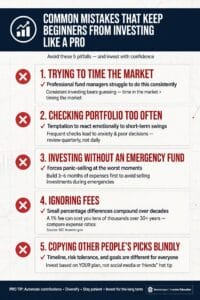
Common Mistakes That Keep Beginners From Investing Like a Pro
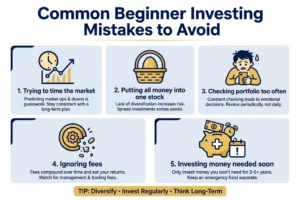
- Trying to time the market. Even professional fund managers consistently struggle to time market entries and exits accurately — consistent investing beats guessing.
- Checking the portfolio too often. Frequent checking increases the temptation to react emotionally to short-term movements that don’t affect long-term goals.
- Investing without an emergency fund. This forces panic-selling during the worst possible moments.
- Ignoring fees. Small percentage differences compound into large dollar amounts over decades, according to guidance from the U.S. Securities and Exchange Commission’s Investor.gov.
- Copying other people’s picks blindly. What fits someone else’s timeline, risk tolerance, and goals may not fit yours at all.
Final Thoughts
Learning to invest like a pro isn’t about complex strategies or insider knowledge — it’s about consistently following a small number of disciplined habits: diversifying, minimizing fees, automating contributions, and keeping emotions out of the process. Start with one or two rules from this list today, and layer in the rest as they become second nature.
Ready to see how consistent investing adds up over time? Try our free Investment Growth Calculator and watch how your own numbers compound.