
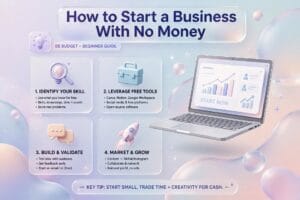
Learning how to start a business with no money sounds impossible at first, but thousands of successful businesses started exactly this way — with resourcefulness instead of capital. While some industries genuinely require significant upfront investment, many service-based and digital businesses can launch with little more than time, skill, and a laptop. This guide covers 8 realistic steps to get started, even on a nearly nonexistent budget.
Step 1: Choose a Business Model That Doesn’t Require Capital
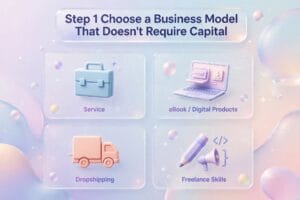
The single biggest factor in how to start a business with no money is choosing the right type of business from the beginning. Some models are naturally low-cost to launch:
- Service-based businesses: Consulting, freelance writing, virtual assistance, tutoring — you’re selling your time and expertise, not inventory
- Digital products: eBooks, templates, courses — created once, sold repeatedly with no ongoing production cost
- Dropshipping or print-on-demand: No inventory investment since products are made and shipped only after a sale
- Freelance skills you already have: Design, writing, coding, marketing — monetizing existing expertise requires no startup capital at all
Avoid business models requiring significant upfront inventory, equipment, or a physical location until you’ve validated demand and generated some initial revenue.
Step 2: Validate Your Idea Before Spending Anything
Before building anything, confirm people actually want what you’re planning to offer. This doesn’t require money — it requires conversations. Talk to potential customers, post in relevant online communities, or offer a small version of your service to a few people for free or at a discount in exchange for honest feedback.
This step alone prevents one of the most common startup mistakes: investing time and effort into something nobody actually wants to pay for.

Step 3: Use Free Tools to Build Your Foundation
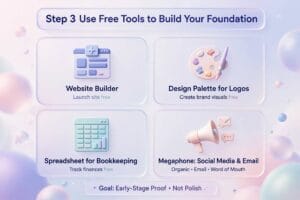
You don’t need expensive software to start. Free or low-cost alternatives exist for nearly every business need:
- Website: Free website builders or a simple landing page tool
- Design: Free graphic design platforms for logos and marketing materials
- Bookkeeping: Free spreadsheet templates or basic accounting software with free tiers
- Marketing: Organic social media, free email marketing tiers, and word of mouth
The goal in the earliest stage isn’t polish — it’s proof that your business idea works before investing in premium tools.
Step 4: Start as a Side Hustle First
One of the most realistic ways to learn how to start a business with no money is to build it alongside your current job, rather than quitting immediately. This approach lets you reinvest early revenue directly into the business while maintaining financial stability, rather than draining personal savings to cover basic expenses.
For more ideas on generating initial income while building your business, see our guide on 21 side hustle ideas to make extra money.

Step 5: Trade Skills Instead of Paying for Services
If you need something you can’t do yourself — a logo, a website, legal advice — consider bartering skills with other freelancers or small business owners. A graphic designer might trade a logo design for social media management, for example. This is a common, practical way entrepreneurs fill skill gaps without spending cash they don’t have yet.

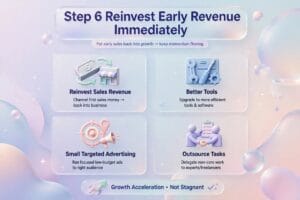
Step 6: Reinvest Early Revenue Immediately
Once you make your first sales, resist the urge to treat that money as personal income right away. Reinvesting early revenue back into the business — better tools, small amounts of targeted advertising, outsourcing a task that’s eating too much of your time — accelerates growth far more than letting the business stay stagnant at its bootstrapped starting point.
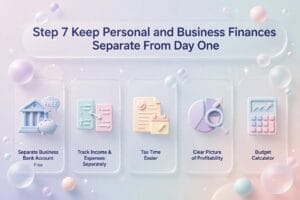
Step 7: Keep Personal and Business Finances Separate From Day One
Even with no startup capital, opening a separate business bank account (many are free) and tracking business income and expenses separately from personal finances is critical. This makes tax time significantly easier and gives you a clear, honest picture of whether the business is actually profitable. Our free Budget Calculator can help you track this alongside your personal finances as the business grows.
Step 8: Understand Legal Basics Before Scaling
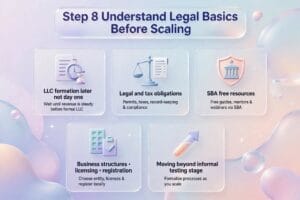
You don’t need to form an LLC or hire a lawyer on day one, but as your business generates consistent revenue, understanding basic legal and tax obligations becomes important. The U.S. Small Business Administration offers free resources on business structures, licensing, and registration requirements that apply once your business moves beyond the informal, testing stage.
Realistic Business Ideas That Require Little to No Capital
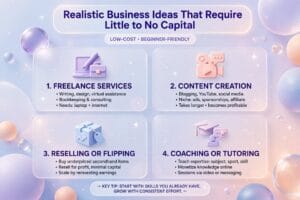
Freelance Services
Writing, design, virtual assistance, bookkeeping, or consulting in your area of expertise — all sellable with nothing more than a laptop and an internet connection.
Content Creation
Blogging, YouTube, or social media content built around a specific niche can eventually generate income through ads, sponsorships, or affiliate marketing, though this path typically takes longer to become profitable.
Reselling or Flipping
Buying underpriced or secondhand items and reselling them for profit requires minimal starting capital and can scale as profits are reinvested.
Coaching or Tutoring
If you have expertise in a subject, sport, or skill, coaching or tutoring others is a direct way to monetize knowledge you already possess.
How to Fund Growth Once You’ve Started
Once your no-money business starts generating consistent revenue, you may eventually need small amounts of capital to scale. At that point, options include:
- Reinvested profits: The most common and lowest-risk funding source for early-stage businesses
- Small business grants: Available through various organizations, particularly for underrepresented business owners
- Microloans: Smaller loan amounts specifically designed for early-stage small businesses
- Crowdfunding: Useful for product-based businesses with a compelling story or pre-sale model

Common Mistakes When Starting With No Money
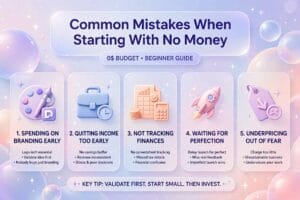
- Spending on branding before validating the idea. A beautiful logo doesn’t matter if nobody wants what you’re selling.
- Quitting a stable income too early. Without savings or consistent business revenue, this creates unnecessary financial stress that can hurt decision-making.
- Not tracking finances from the start. Even a simple spreadsheet prevents confusion and missed tax obligations later.
- Trying to do everything perfectly before launching. An imperfect launch that generates real feedback beats an endlessly delayed “perfect” one.
- Underpricing services out of fear. New entrepreneurs often charge too little, which is unsustainable and undervalues the actual work being done.
Final Thoughts
Figuring out how to start a business with no money comes down to choosing a low-capital business model, validating demand before spending, and reinvesting early revenue strategically. It won’t look like a big funded launch — it will look like consistent, resourceful progress, one client or sale at a time.
Once your business starts generating income, keeping your personal and business finances organized becomes essential. Try our free Budget Calculator to track your finances as your new venture grows.